

Is English hard to learn? The short answer is: it depends on you.
English is considered moderately difficult: easier than languages with complex grammar, but harder than languages with very consistent rules.
Your first language, your exposure to English, and your learning experience all play a big role.
The good news? Anyone can learn English with the right method.
This guide shows you why English feels hard sometimes, what actually makes it easier, and how to learn it more effectively.
Why English Feels Easy for Some Learners and Hard for Others![]()

English difficulty is not the same for everyone.
Some learners pick it up quickly because English is similar to their mother language or because they grew up with English media.
Others struggle because English grammar, pronunciation, and vocabulary feel unfamiliar.
Personal learning style, motivation, and confidence also influence how difficult English seems on a day-to-day basis.
The Influence of Your First Language (L1)
Your first language is one of the strongest predictors of how easy English will feel.
If your L1 shares vocabulary or a similar structure to English like Spanish, French, or German, you might learn faster.
But if your L1 is structurally very different–such as Arabic, Japanese, or Thai–you may need more time to adjust to English.
This includes grammar patterns, verb forms, and sounds that don’t exist in your language.
How Learning Other Languages Helps You Learn English
If you already speak more than one language, you have a major advantage.
Multilingual learners are used to spotting patterns, memorizing new words, and switching between grammar systems.
This mental flexibility makes learning English faster and more intuitive.
It’s kind of recognizing a familiar puzzle with different pieces, right?
Why Daily Exposure and Motivation Speed Up English Learning
The more English you hear, see, and use, the faster you learn–as simple as that.
Exposure through music, movies, social media, podcasts, or conversations helps your brain absorb grammar naturally.
Motivation also matters!
Learners who enjoy the process or have a strong purpose (travel, work, study) usually progress much faster.
What Makes English Hard to Learn
English has several features that challenge learners.
These pain points appear across most learner surveys and competitor guides.
Now, we’ll address them clearly and simply, along with a quick mini-tip to help.
Pronunciation and Spelling Inconsistencies
English spelling rarely matches pronunciation: though, tough, thought, through all look similar but sound different.
Accents also influence how words are spoken.
Mini-tip: Learn pronunciation using listening-first methods (songs, YouTube, pronunciation apps) before memorizing spelling.
English Grammar Rules and the Many Exceptions
English grammar looks simple at first, but it’s full of exceptions.
Irregular verbs (go → went), unusual plurals (child → children), and phrases that break the rules can confuse learners.
Mini-tip: Memorize irregular forms gradually, 5 verbs per week is enough.
Phrasal Verbs and Multi-Word Expressions
Phrasal verbs like look up, turn off, get over have meanings that aren’t obvious from the words alone.
Mini-tip: Study phrasal verbs by theme (travel, work, daily life) so they feel more connected.
Idioms and Slang as a Cultural Barrier
English is rich with idioms such as “break the ice,” “hit the books,” “piece of cake.”
These expressions are non-literal and tied to culture, which can confuse new learners.
Mini-tip: Learn idioms through TV shows or short clips where you can see context.
A Large Vocabulary and Words With Many Meanings
English has one of the biggest vocabularies in the world.
Many words have multiple meanings (set, run, bank), making comprehension tricky.
Mini-tip: When you learn a new word, note at least two meanings to expand your understanding.
How Different Accents Make English Sound Different
English varies widely across regions–British, American, Australian, Indian, and more.
Pronunciations, word choices, and even sentence rhythms change.
Mini-tip: Pick one accent as your base model, but stay open to understanding others.

What Actually Makes English Easier to Learn
Despite its challenges, English has several advantages that make it easier than many languages:
- Clear, simple alphabet
- Basic sentence structure
- No gendered nouns
- Massive access to learning materials
- English everywhere in movies, music, games, and social media
These features help learners progress quicker than they expect.
A Simple Alphabet and Writing System
Fortunately, English uses the Latin alphabet–the same one used in many world languages.
This makes reading and writing much easier for learners.
Unlike languages with character-based systems like Mandarin or complex scripts like Arabic.
No Gendered Nouns and Fewer Verb Endings
Compared to Spanish, French, or German, English nouns don’t have gender.
Verbs also have fewer endings (only -s for third person singular).
This makes English grammar significantly simpler at the beginning stages.
Unlimited Access to English Learning Materials
From Netflix and YouTube to books, news sites, and social media, English content is everywhere!
You have thousands of free resources like tutorials, podcasts, and apps that make practice easy and fun.
How English Compares to Other Common Languages
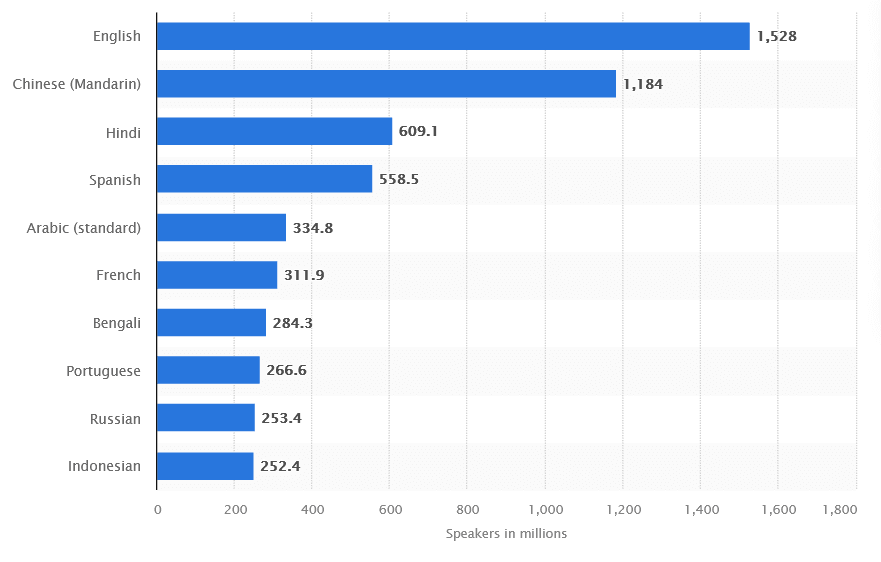
Even though English has challenging pronunciation and vocabulary, it has simpler grammar compared to many global languages.
Many learners find English easier than Mandarin, Arabic, or Russian and similar in difficulty to Spanish or French.
Tips to Make Learning English Easier
Here are simple, beginner-friendly strategies to progress faster:
- Listen to English daily (podcasts, music, movies).
- Speak at least 5 minutes a day, even to yourself.
- Read short English content like news headlines or social posts.
- Use a notebook for new words and example sentences.
- Review grammar only when you’re confused, not all at once.
- Use learning tools like Cambridge Write & Improve or Grammarly.
- Consider joining an online class or structured program like EZClass for guided practice, live feedback, and clearer learning goals.
Conclusion
English isn’t the hardest language in the world, but it isn’t the easiest either.
Try to apply the tips above to improve your English!
With consistent exposure, smart strategies, and daily practice, you can make English much easier to learn.
Check out the lessons available on EZClass and the EZClass Blog for structured support to keep improving every day.

Edwin Cañas
Founder of EZClass
Edwin Cañas is an expert in e-learning, leadership, and educational technology. As COREnglish’s Strategic Advisor and founder of EZClass, he strives to make learning more engaging and accessible. He also co-authored the "How to Master Grammar for Beginners (Spanish Edition)" book to help Spanish learners master English with ease.